

AI Has Opinions About Your Body
Type a few words into an image generator — “naked man,” “male nude,” “intimate portrait” — and within seconds, bodies appear. Smooth, confident, posed. Strangely familiar. Strangely bloodless. In an age where AI can undress a man faster than most people can unbutton a shirt, it’s worth slowing down and asking what’s actually being revealed. This post briefly references reporting from a Wired article discussing how generative AI depicts people.
Naked Men, According to the Machine
AI-generated images of naked men are everywhere now. They show up in art feeds, design experiments, marketing mockups, and the darker corners of curiosity-driven prompts. At first glance, they can be impressive: lighting is perfect, proportions are balanced, skin looks impossibly even. No tan lines. No scars. No awkward angles.
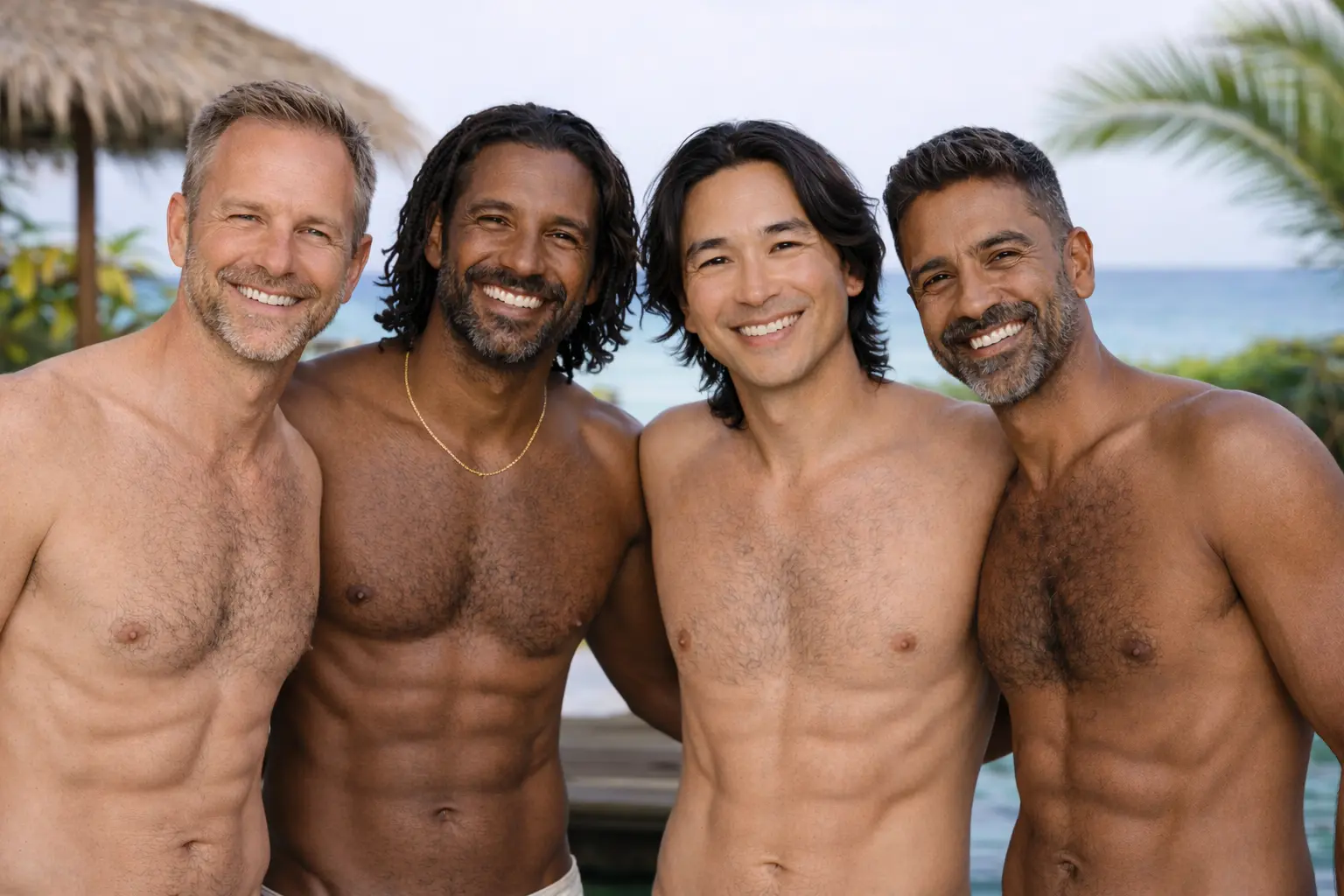
But the longer you look, the clearer it becomes that these bodies aren’t really about nudity at all. They’re about control.
AI doesn’t “see” nakedness the way humans do. There’s no vulnerability, no anticipation, no self-consciousness. A body isn’t something that feels exposed — it’s something that’s rendered. Nudity becomes a surface problem to solve, not a human state to inhabit.
And because AI learns by absorbing patterns, the naked men it generates tend to repeat the same visual language over and over. Youth skews heavily. Muscle tone sits in a very specific sweet spot. Skin reads as flawless. Bodies signal availability without risk.

Genitals are a good example of this tension. Sometimes they’re conspicuously absent or smoothed into near abstraction. Other times they’re exaggerated — outsized, hyper-present, almost cartoonish. Both extremes miss the point in the same way. Real bodies aren’t optimized symbols. They’re inconsistent, contextual, and rarely designed to make a statement at all. AI, on the other hand, keeps trying to decide what genitals should mean.
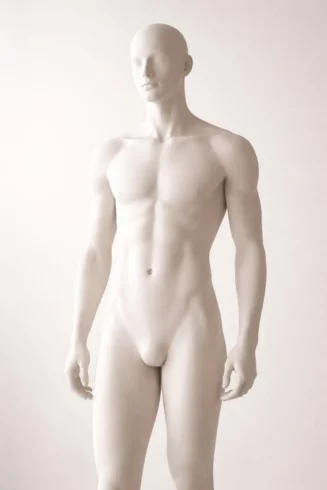
That impulse — to sanitize or sensationalize — reveals how uncomfortable we still are with male nudity, even when we claim to be liberated about it. The machine simply mirrors that discomfort back to us.
When queerness enters the picture, things get even more interesting.
AI often leans into shorthand when asked to depict queer men — a tilt of the hip, a stylized gaze, a curated kind of intimacy. It’s not malicious; it’s mechanical. The system is drawing from cultural signals it’s seen repeated thousands of times. But repetition flattens. What gets lost is range: the quiet, the ordinary, the contradictory, the unperformative.
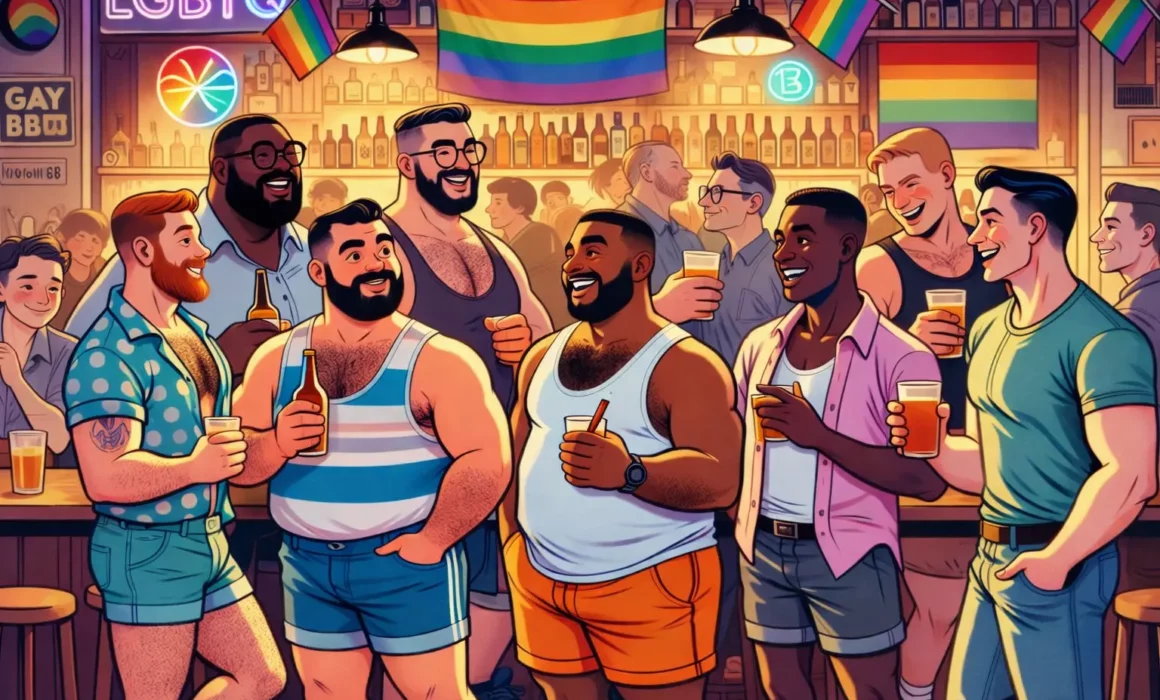
A recent Wired article touched briefly on how generative AI tends to depict queer people through limited visual cues, reinforcing familiar tropes rather than expanding representation. It’s a useful reminder, but not the whole story. The bigger issue isn’t just queerness — it’s humanity.
Because even when AI gets everything “right,” something is missing.
There’s no sense that the body belongs to someone. No backstory. No moment before or after the image. No heat, no hesitation, no awareness of being seen. These men aren’t naked with anyone, or for anyone. They’re naked in a vacuum.
Compare that to real-life nudity — especially shared nudity. Being naked among other people carries weight. It can be playful, awkward, erotic, grounding, liberating. It shifts how we relate to ourselves and to others. It’s contextual. Relational. Alive.

That’s the part AI can’t generate.
At Everything To Sea, nudity isn’t an aesthetic outcome — it’s a lived experience. Bodies come with history, humor, nerves, and change. They sunburn. They scar. They soften. They surprise their owners. Over the course of a trip, people often stop thinking about how their bodies look and start noticing how they feel. No dataset can model that transition.
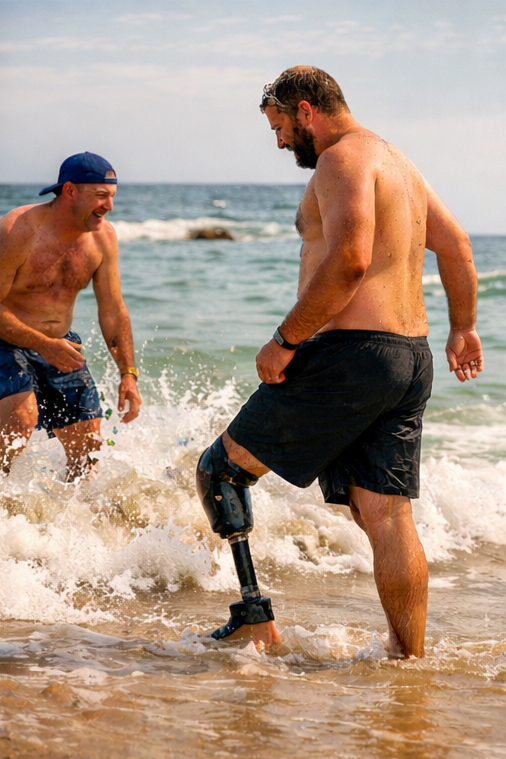
AI-generated naked men might be visually polished, but they’re emotionally unfinished. They show us what happens when bodies are optimized instead of inhabited.
And maybe that’s their quiet value: not as replacements for real representation, but as reminders of what can’t be automated.
We’d love to hear how you experience these images. What do you notice when you see AI-generated naked men? What feels familiar, what feels absent, and what questions do they raise for you? Share your thoughts in the comments — the conversation is always better when real people bring real perspectives.
I’m not sure AI is doing something fundamentally new here. Gay visual culture has always played with idealised bodies — from Tom of Finland to the physique magazines of the 1950s. These were stylised, aspirational images, not lived bodies, and they were openly about fantasy and objectification.
Objectification itself isn’t new or uniquely technological. Straight culture has long had its equivalents too — Penthouse, Playgirl, and similar media traded in the same kind of polished archetypes.
What feels different with AI isn’t the idealisation, but the process: the body is generated without a body behind it. That absence is interesting, but it’s part of a much longer visual tradition rather than a sudden rupture. What is more questionable, health-wise – are apps where you can create AI-persons / boyfriends that actually talk with you.
Philip, this is such a smart framing. You’re right, the idealised body has a long history; AI just removes the “body behind the body,” which changes the emotional stakes. And yes on the AI-boyfriend apps, that feels like a whole separate health rabbit hole.
L’IA sera, comme la connaissance de l’atome ou plus anciennement de la dynamite, avec son utilisation très utile mais aussi à des fin plus perverses.
Bonjour chatellier, thank you for this. You’re right: like most technologies, AI can be genuinely useful or drift into darker territory, and it really comes down to how it’s built and how people choose to use it.